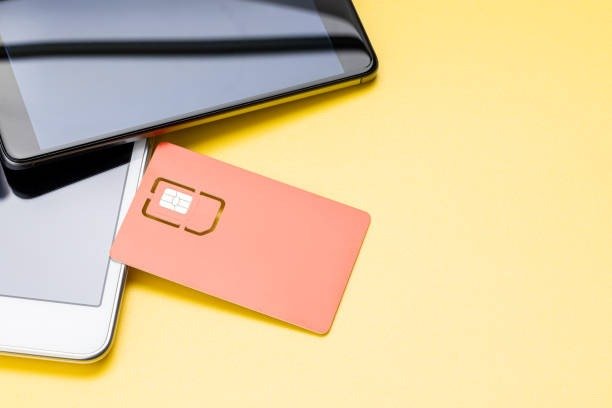
Orange Travel eSIM: The Complete Guide for European Travelers in 2026
Europe has never been easier to navigate digitally, and in 2026 the Orange Travel eSIM stands at the center of how millions of international visitors stay connected across the continent. From a weekend in Paris to a Eurail journey through eight countries, Orange Travel offers a single prepaid eSIM that activates before departure, connects automatically at every border, and delivers voice, SMS, and data without a physical SIM card in sight. This guide examines every aspect of the product — what it is, how it works, what it costs, and exactly who it is built for.
What Orange Travel eSIM Is and How It Works
Orange Travel is the travel-focused eSIM service operated by Orange SA, France’s incumbent telecoms operator and one of the largest mobile network operators in the world. Originally marketed as Orange Holiday Europe, the product was rebranded as Orange Travel in 2025 while retaining identical network access, plan architecture, coverage footprint, and pricing. Travelers who encounter both names online are looking at the same product.
Unlike the majority of travel eSIM providers — which are resellers purchasing wholesale capacity from network operators — Orange Travel routes through Orange’s own infrastructure across much of Europe. In France, Spain, Poland, Belgium, Romania, and Slovakia, Orange operates its own towers, which means travelers are connecting as direct network customers rather than as secondary MVNO users. This structural difference translates into local subscriber speeds, lower deprioritization risk during peak network load, and more consistent performance in the rural and mountainous areas where MVNO agreements routinely underperform.
The Core Features That Define the Orange Travel Experience
- 40+ country coverage: a single plan covers every EU member state plus the United Kingdom, Switzerland, Norway, and additional non-EU European destinations at no extra cost.
- Real French phone number: every plan includes an active +33 mobile number that receives calls and SMS — functional for restaurant reservations, hotel confirmations, and any service requiring local number verification.
- Unlimited calls and SMS within Europe: full-plan tiers include unrestricted voice calling and text messaging across all covered European countries, not just data access.
- Unrestricted hotspot sharing: no speed throttling or daily volume cap on tethering — a family or group can connect multiple devices through a single Orange Travel plan without restriction.
- Full 4G and 5G access: no speed limitation is applied to any tier; travelers access the same network speeds as local subscribers on Orange’s own infrastructure.
These five features in combination represent an offering that no data-only eSIM competitor currently replicates in a single product. Airalo, Holafly, Saily, and Jetpac are all strong products in their respective categories — but each is a data-only plan. Orange Travel is the only mainstream European travel eSIM that bundles voice, SMS, a local phone number, and data into a single prepaid package purchasable before departure.
Orange Travel eSIM Plans: Data Tiers and Pricing for 2026
Orange Travel’s plan range for 2026 has expanded significantly compared with its 2024 catalog, adding large data tiers and flexible validity options that make it competitive for both short city breaks and extended European stays. A comprehensive breakdown of how these plans compare with the wider market is available in the Of Whiskey and Words guide to the Orange Travel eSIM and the full European eSIM market, which covers coverage, data, and value across the leading providers for 2026 travelers.
- 20 GB / 14 days: entry plan at $22.99, includes calls and SMS with a French number — the best-value option for a one to two week trip.
- 50 GB / 30 days: mid-tier at $34.99, suited to two to four week trips or moderate remote work use alongside standard leisure travel.
- 100 GB / 30 days: at $49.99, practical for frequent video calls, content uploads, or multi-device hotspot use across a full month.
- 200 GB and 500 GB plans: available for extended stays and digital nomads requiring consistent high-volume connectivity without daily consumption anxiety.
- Data-only plans: a separate lower-cost option for travelers who need no voice or SMS capability and communicate entirely through internet-based apps.
- Top-up options from 1 GB to 500 GB: purchasable instantly within the Orange Travel app without reinstalling the eSIM profile or scanning a new QR code.
Coverage Across Europe: Where Orange Travel Performs Best
Orange Travel’s European coverage spans more than 40 countries, and the quality of that coverage is directly tied to the depth of Orange’s owned infrastructure in each market. In France, the performance is unmatched: Orange operates the largest and most geographically comprehensive mobile network in the country, with rural coverage verified by Arcep as the strongest of the four domestic operators across inland regions, Alpine approaches, Atlantic coastal roads, and the island of Corsica. For any traveler whose French itinerary extends beyond Paris and the main TGV corridor, this network advantage is tangible and measurable.
Across the rest of Europe, Orange Travel roams on the best available partner network in each country. The plan includes the United Kingdom at no additional cost — a significant differentiator given that many European eSIM providers exclude the UK following Brexit, treating it as a separate purchase. Switzerland and Norway, which sit geographically at the heart of Europe but outside the EU’s roaming framework, are similarly included in the standard European plan. For travelers combining a France trip with time in London, Geneva, or Bergen, this coverage breadth eliminates the need for any supplementary purchase.
In Eastern Europe, Orange Travel performs reliably in Poland, Romania, and Slovakia where Orange operates owned infrastructure, and through partner agreements in Hungary, Czech Republic, and the Baltic states. The Balkans — Serbia, Albania, Kosovo, North Macedonia, and Bosnia — are excluded from the standard European plan, which is worth verifying before any itinerary that extends into the Western Balkans.
Installing the Orange Travel eSIM: From Purchase to First Connection
Orange Travel’s installation process is one of the most streamlined in the market. Unlike most competitors that deliver a QR code for scanning, Orange Travel offers one-click installation directly through its app — the eSIM profile downloads and installs in a single tap without the need to open the phone’s Settings menu and scan a code. For travelers who find QR code installation confusing or who are setting up an eSIM for the first time, this difference is meaningful.
- Download the Orange Travel app: available on the App Store and Google Play before purchasing.
- Choose and purchase your plan: select data volume and duration; pay via card, Apple Pay, or Google Pay — no hidden fees.
- Install with one tap: the app installs the eSIM profile automatically without a QR code scan.
- Activate on arrival: switch the active data line to Orange Travel when landing; the phone connects to the local Orange network within seconds.
One important practice applies regardless of provider: install the eSIM profile before departure, but do not switch it to the active data line until you land in Europe. Orange Travel’s plan validity begins at first activation on a local network, not at installation — preserving the full plan duration from the first day of actual use. If no signal appears after switching, toggling Airplane Mode on and off resolves the issue in virtually all cases within two minutes.
The French Phone Number: Why It Changes the Travel Experience
The inclusion of a genuine +33 French mobile number in Orange Travel’s full plans is consistently cited by travelers as one of the product’s most practically useful features — and one that is easy to underestimate until a specific moment on a trip makes it suddenly indispensable. France’s service environment relies on phone-based confirmation more extensively than most travelers expect. Formal restaurant reservations, private rental confirmation calls, museum access codes sent by SMS, and local service verification all require a functioning local number to complete.
Virtual number services — third-party apps that provide a temporary number over an internet connection — are the most common workaround used by travelers on data-only eSIM plans. They function adequately in many cases, but they fail silently in others: French banking and government-adjacent platforms, SNCF ticketing, certain museum booking systems, and two-factor authentication services that detect and reject virtual numbers. Orange Travel’s +33 number is a genuine mobile number registered on the French network — indistinguishable to any receiving system from a domestic French subscriber’s line. It resolves every scenario that a virtual number cannot.
See also: Charlotte to Bengaluru Flights: A Complete Travel Guide for International Travelers
Orange Travel vs. The Competition: A Measured Comparison
The travel eSIM market in 2026 is genuinely competitive, and Orange Travel occupies a specific and clearly defined position within it. Independent reviews from MyBestSim, Saily, Cybernews, and Dream Big Travel Far Blog conducted in 2025 and 2026 converge on a consistent assessment: Orange Travel leads for travelers who need calls, SMS, and a local phone number; Airalo and Saily lead for data-only budgets; Holafly leads for unlimited data without consumption anxiety; Jetpac leads for the widest country footprint at 43 nations with multi-network switching.
The criticism most consistently leveled at Orange Travel is pricing at the entry level. A 1 GB data-only France plan from Orange costs approximately $5.99, while Saily’s equivalent starts at $3.99 and esimNB at $1.50. For travelers who need only basic data and conduct all communication through internet-based apps, these alternatives deliver better per-gigabyte value. The Orange Travel premium is fully justified when voice capability, a local French number, and unrestricted hotspot are requirements — for these travelers, combining a cheaper data plan with a virtual number service and a calling app typically costs more in aggregate and delivers less reliability than a single Orange Travel plan.
One limitation worth noting is the absence of a truly unlimited data option from Orange Travel. While the 200 GB and 500 GB tiers are practically unlimited for most real-world travel scenarios, travelers who want a formal unlimited plan without any cap — particularly for extended Holafly-style purchases — will find that Holafly and Saily technically offer the unlimited label that Orange does not. In practice, 500 GB at full 4G or 5G speed represents approximately 60 hours of HD video streaming — a volume that no traveler using an eSIM for a European trip would realistically approach.
Who Orange Travel eSIM Is Built For
- Multi-country European travelers: moving through five or more countries who want a single eSIM that works seamlessly at every border without any manual switching or plan changes.
- US and international tourists in France: who need a French phone number for restaurant reservations, accommodation confirmations, and service verification that data-only plans cannot provide.
- Business travelers: requiring stable voice communication, a local European number for professional calls, and consistent data performance across urban and rural environments.
- Families and small groups: who can share one Orange Travel plan’s unrestricted hotspot across multiple devices, with a 20 GB plan typically covering two to four travelers for a full two-week holiday.
- Frequent European travelers: who install the Orange Travel app once and reactivate a new plan for each trip without reinstalling — accumulating the convenience of a permanent profile over multiple journeys.
Orange Travel is less well-suited to budget-first travelers whose sole requirement is the cheapest possible gigabyte of French or European data, or to travelers making the Balkans, Turkey, or Central Asia a primary destination, where Orange’s non-European coverage is less competitively priced than specialist global providers. For everyone else planning a substantive European trip in 2026, Orange Travel’s combination of owned network infrastructure, full communication capability, and risk-free purchase policy makes it the most completely featured travel eSIM in the market.
The Refund Policy and Risk-Free Purchase Advantage
Orange Travel’s 100% refund policy on unused, unactivated eSIMs is a feature that deserves more attention than it typically receives in comparative reviews. Most travel eSIM providers apply strict no-refund policies after purchase, on the basis that the digital product was delivered at the moment of QR code generation. Orange Travel’s position is different: if a plan is purchased and the eSIM is never activated on a network, a full refund is available by contacting support through the app or by email.
The practical implication is significant. A traveler who purchases an Orange Travel plan before a European trip and then has their trip cancelled, postponed, or significantly shortened loses nothing. They can request a complete refund regardless of how long ago the purchase was made, provided the eSIM was not yet activated. This makes Orange Travel one of the only travel eSIM products that can be purchased as part of trip planning without any financial risk attached to the possibility that plans change — a consideration that matters particularly for travelers booking long in advance or for trips where itinerary uncertainty is high.
Managing Data and Getting the Most from Your Orange Travel Plan
Orange Travel’s in-app management dashboard is one of the most transparent data monitoring interfaces in the travel eSIM market. It displays remaining data balance, plan expiry date, and current usage in real time on the app’s home screen — no login required, no navigating through settings menus. Push notifications alert travelers when they approach their data threshold, and a top-up can be completed within seconds from any location with a working internet connection.
- Download offline maps before each travel day: Google Maps’ regional offline packages eliminate the largest single source of cellular data consumption on active travel days.
- Use accommodation Wi-Fi for heavy tasks: streaming, large uploads, and software updates should be routed through fixed Wi-Fi; reserve the eSIM data allowance for on-the-move connectivity.
- Enable Data Saver on the eSIM line: iOS and Android both allow data management settings to apply specifically to a secondary SIM line, suppressing background sync without affecting the home SIM.
- Disable data roaming on the home SIM immediately after activating the eSIM: this single step prevents accidental charges from the home carrier’s international roaming rates during the trip.
The combination of Orange Travel’s unrestricted hotspot and the app’s real-time data monitoring creates a practical feedback loop: travelers who share connectivity with a companion can track combined consumption in the app and top up proactively rather than reactively, avoiding the mid-trip disruption of an unexpected data exhaustion at an inconvenient moment.
Orange Travel for Long-Stay and Repeat European Travelers
Orange Travel’s product architecture rewards repeat usage in a way that most competitors do not replicate. Once the Orange Travel eSIM profile is installed on a device, it remains installed permanently — subsequent plans are purchased and activated through the app without any reinstallation, new QR code, or profile management steps. A traveler making three European trips per year carries a single persistent eSIM profile and simply purchases a new plan before each departure. The profile becomes a permanent fixture in the phone’s cellular settings, ready to activate the moment any European trip begins.
For extended stays of one month or more, the 200 GB and 500 GB plan tiers make Orange Travel genuinely competitive with local SIM cards on a per-gigabyte basis while retaining the convenience advantages — no in-person registration, no passport presentation, no French-language store visit — that a local SIM requires. The 500 GB plan, priced to reflect the volume while remaining below the cost of equivalent international connectivity from most home carriers for a comparable duration, represents Orange Travel at its most compelling for the digital nomad, the long-term visitor, and the remote worker building a European work base.
Making the Right Choice: Is Orange Travel eSIM Right for Your 2026 European Trip
- Choose Orange Travel: if your trip spans multiple European countries, you need a French phone number, voice and SMS capability matter, or you want unrestricted hotspot sharing without any add-ons.
- Choose Airalo or esimNB: if your requirement is purely data at the lowest entry price for a single country or short city break where voice and a local number are unnecessary.
- Choose Holafly or Saily: if unlimited data is the primary requirement and you communicate entirely through internet-based apps with no need for a local phone number.
- Choose Jetpac: if your itinerary requires the widest possible country footprint — 43 nations — combined with multi-network switching and the option to add voice minutes selectively.
The European travel eSIM market in 2026 has matured to the point where every traveler can find a credible product that matches their specific journey. Orange Travel occupies the premium tier of that market — not in terms of price, but in terms of completeness. It is the product that adds a phone number to data, voice to messaging, and a network operator’s owned infrastructure to a reseller’s wholesale agreement. For the traveler who wants all of that in a single purchase, installed before departure and ready to connect the moment the plane touches down, Orange Travel is the most fully realized European travel eSIM available in 2026.
Europe is a continent where the quality of every day is shaped by the ability to move through it fluidly. Orange Travel is the connectivity that makes that movement seamless — from the first navigation instruction out of Charles de Gaulle to the final map pin dropped on the last afternoon of a journey worth remembering.